
The West Bengal CM's media equation wasn't always this bad. In the run-up to the assembly elections of 2011, she was a clear favourite.

Kolkata trams -- now in their 150th year -- are the last to survive modernity in Indian cities, writes Ishita Ayan Dutt.
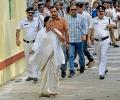
In a deviation from the usual venue of Raj Bhavan, the event of May 27, will be held on the Red Road, one of the arterial roads in Kolkata that houses the Fort William where the Army is headquartered. And, it will remain blocked for at least five days, probably more.

Analysts suggest making separate firms of tobacco, hotels and FMCG divisions

Mass agitations are not particularly uncommon in India. But a mass agitation led by an environment-related issue that has gone out of hand is not something that can be easily recalled.

Each state has its own weak areas that need attention. Some states have already identified the gaps and sought the Centre's help. Vinay Umarji, Ishita Ayan Dutt, Samreen Ahmad and Sohini Das report.
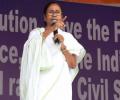
'A loss of seats for the Trinamool in this election will weaken its hold in Bengal, which will not augur well before the assembly election in 2021.'

Majority expect economy to slow down, but are satisfied with Modi govt's performance.
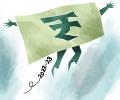
83% of the CEOS plan to hire more in the new year.

To tide over the difficulties due to incessant shutdowns, several farmers in Maharashtra have turned into aggregators and started selling their produce without the help of mandis or agents. They have started contracting with bulk consumers like hypermarkets and co-operative housing societies to sell their produce directly.

UP Rs 50 billion, followed by Maharashtra, Bihar, and West Bengal which may need close to Rs 25 billion for the massive task.
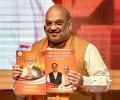
Whatever the outcome from the assembly elections, what's evident is that West Bengal has entered an era of identity politics, reports Ishita Ayan Dutt.

'It will take six months to one year to move to normalcy, depending on how the pandemic plays out in India.'

Tata Steel delivered one of its best financial performances ever in the third quarter of the current financial year, and surpassed its deleveraging target of $1 billion. In an interview, Koushik Chatterjee, executive director and chief financial officer, Tata Steel, tells Ishita Ayan Dutt that the company will continue to focus on deleveraging but profitable and value-added growth will be equally important.
Many are testing hybrid models including getting small batches to work, rotating staff every week, introducing shifts and allowing certain functions to operate from office in small numbers.

After the Trinamool's overwhelming majority in the West Bengal assembly elections last year, the SSC scam has given fresh ammunition to the Bharatiya Janata Party and the Communist Party of India-Marxist. Ishita Ayan Dutt reports.

33-year-old Abhishek Banerjee has emerged as the most visible and significant leader in the party after his pishi (aunt), Mamata Banerjee reports Ishita Ayan Dutt.
A hotel in 1975, entry into paperboards in 1979, India's dominant cigarette maker, ITC, read the tea - or tobacco - leaves early, leveraged its enterprise strengths and stepped up the diversification agenda to create multiple drivers of growth. Some failed, some faltered, some were transformational, adding steadily to the top line. Now those efforts are making a difference: margins from non-cigarettes - FMCG, hotels, agri, paperboards, paper and packaging - are expanding and profits are kicking in more significantly than ever before.

Those who know Alapan Bandyopadhyay describe him as measured, tactical and extremely focused on achieving what he sets out to do. To many it came as a surprise that he would cut short a meeting with the prime minister.

'Everyone wants to take a vaccine. The last time a camp was held, there were 1,000 people for 500 doses. People are waiting and returning disappointed. At times, it is creating problems. The demand is much more than the supply.' Ishita Ayan Dutt reports on how the West Bengal countryside is reacting to the vaccination drive.
'Does it mean that till the COVID-19 fight is over, the governor should be non-functional, in sleep mode, and fiddling in the Raj Bhavan while the state is burning?'

Against the backdrop of the Lok Sabha results, a much larger scale of desertion was anticipated from the TMC. 'It seems, people don't believe that the ship is sinking.'

Naturally, the West Bengal chief minister is not leaving anything to chance, reports Ishita Ayan Dutt.

Tatas plan to revive, not sell the Port Talbot steel plant. The investment could be as much as $500 million.

Government officials working overtime to dismantle the Tata plant and return land to farmers, says Ishita Ayan Dutt.

With the dizzying rise in the number of Covid-19 cases in the country, India Inc has transitioned from a wait-and-watch policy to full-on emergency mode, bringing back remote and flexi work, stringent safety protocols, and allowing only essential travel. Companies - especially in metros like Delhi, Mumbai and Kolkata - that had adopted a hybrid work model during the last few months when the caseload remained low, are either switching back entirely to work-from-home (WFH), or calling skeletal staff to office on select days. Take the case of cigarettes-to-hotels major, ITC, which had been on a hybrid work model over the last few months.

A dedicated jazz club is just what Kolkata needed to get things going. And Skinny Mo's has announced its arrival to the enthusiastic city.


Pawan Ruia has finally done it, a beaming Buddhadeb Bhattacharjee, then West Bengal chief minister, had said at the reopening of the 70-year-old Sahagunj factory owned by Dunlop in 2005. But with the Calcutta high court passing a winding-up order in 2013 and the Trinamool Congress-led state government passing a Bill to take over the company in 2016, the once-upon-a-time undisputed leader in the Indian tyre industry looks vastly undone. But that can hardly be a deterrent for Ruia, who has a penchant for making headlines one way or the other.

In the early part of 1800, a 30-acre plot next to Fort Gloster on the banks of river Hooghly in Howrah district of Bengal was the nerve centre of industrial activity; it housed India's first steam-powered cotton mill, Bowreah Mills, which was set up by a British merchant and went on to become a hub of factories - a rum distillery, foundry, cotton yarn factory, an oil mill and a paper mill, et al. Spearheaded by Dwarkanath Tagore, the industrialist grandfather of Rabindranath Tagore, the commercial complex was possibly the first of its kind in the country. Close to 200 years later, after much ebb and flow of history, the hub is set for a resurgence of sorts.

The once ailing Saregama is getting its mojo back. Bolstered by Carvaan, a portable digital audio player that turned out to be a disruptor, the company has chalked out an aggressive growth path. In an interview with Avishek Rakshit and Ishita Ayan Dutt, Sanjiv Goenka, bottom, chairman of RP-Sanjiv Goenka Group, talks about a road map, which includes taking Carvaan to the next level, launching more films on OTT platforms and getting back into Hindi film music production after a decade.

Most of the hirings are, however, in the entry or junior level.

As Covid-19 cases surge in India, companies have realised it's a tightrope walk between maintaining production and ensuring employee safety.

Nandigram, 126 km south of Kolkata, is Suvendu Adhikari's bastion, where he has vowed to defeat Mamata Banerjee by 50,000 votes or quit politics.

In power, Mamata Banerjee has tried to bury the ghost of the past, but it might still be work-in-progress. Big-ticket and eye-grabbing (in terms of investment size) projects are still few and far between, reports Ishita Ayan Dutt.

The idle talk at street corners, cafes and public places since May 23 is that the winds of change are blowing across Bengal.

The saffron party's IT cell had realised the power of WhatsApp early in the day and wielded it to devastating effect in the Bengal elections.

'He was sought after because he delivered.' Ishita Ayan Dutt profiles Tata Steel's new boss.
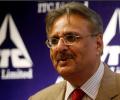
During his time as executive chairman, the company's net revenues grew 17-fold to Rs 42,777 crore and profit after tax nearly 40 times to Rs 10,289 crore. Total shareholder returns grew at a compounded annual rate of around 20%. Besides numbers, his biggest achievement was to transform ITC from a cigarette company to a diversified enterprise.

The change in ownership is expected to give a fresh lease of life to the company that has often been dragged by financial stress in its close to three-decade journey under the Khaitans, reports Ishita Ayan Dutt.
 © 2026 Rediff.com - Advertise with us - Disclaimer - Privacy Policy - Sitemap - Feedback - About us - Terms of use - Grievances